Buena Park history
From berry fields to Beach Boulevard
How a dairy and farm town founded in 1887 became the home of America’s first theme park — told through archive photos and two long-form films.
Quick facts
- Town laid out
- 1887
- Founder
- James A. Whitaker
- Incorporated
- 1953
- Knotts arrive
- 1920
Buena Park through the eras
Before 1880s
Rancho country
The land was home to the Tongva and Acjachemen peoples, then became part of the vast Spanish and Mexican ranchos of the Los Angeles basin, used mostly for cattle grazing.
1885–1900
A town called “good park”
Chicago grocer James A. Whitaker bought land here in the mid-1880s and laid out the townsite of Buena Park in 1887. The Lily Creamery opened in 1889, making the young farm town a dairy center.
1920–1940
Berries and chicken dinners
Walter and Cordelia Knott began farming leased land in 1920 and opened a roadside berry stand beside Highway 39 — today’s Beach Boulevard. Walter popularized the boysenberry in the 1930s, and in 1934 Cordelia began serving fried chicken dinners that drew long lines.
1940–1968
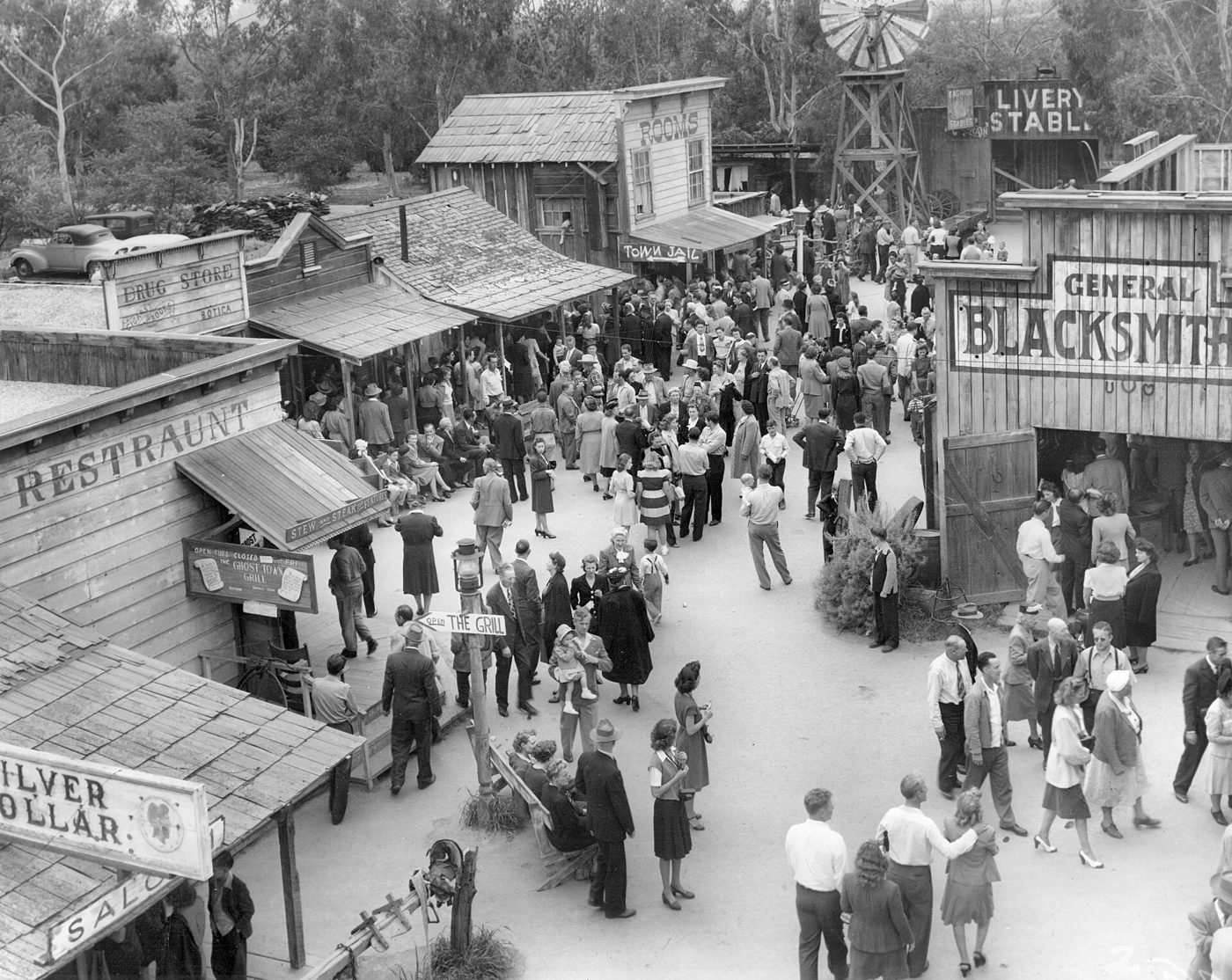
Ghost Town and the postwar boom
Ghost Town opened in 1940 to entertain waiting diners, and the Calico & Ghost Town Railroad followed in 1952. Buena Park incorporated as a city in 1953 as orchards gave way to suburban tracts and freeways.
1960s–2000s
Entertainment corridor
Beach Boulevard filled with attractions, including the Movieland Wax Museum (1962–2005). Knott’s began charging admission in 1968 and grew into a full theme park; Medieval Times opened in the 1980s.
Today
A city of 80,000
Buena Park blends historic homes like the Whitaker-Jaynes Estate with Koreatown-style dining, The Source OC, Ralph B. Clark Regional Park and the theme parks that put it on the map.
Watch: two long-form histories
Hear the story from the archives.
Buena Park history videos
 Library talk · 1 hr 37 min
Now showing · Library talk · 1 hr 37 min
Knott’s Bear-y Tales: The Complete History of the Whimsical Attraction
A long-form talk with photo archives on the 1975 dark ride and the Knott family’s park — a deep look at Buena Park’s best-known story.
Video by LA Public Library · YouTube
From Wikimedia Commons
Archive photographs
c. 1940s
Ghost Town, Knott’s Berry Farm
Walter Knott’s Ghost Town grew from a single Main Street of old-West buildings into the heart of the park.
Photo: Orange County Archives · CC BY 2.0
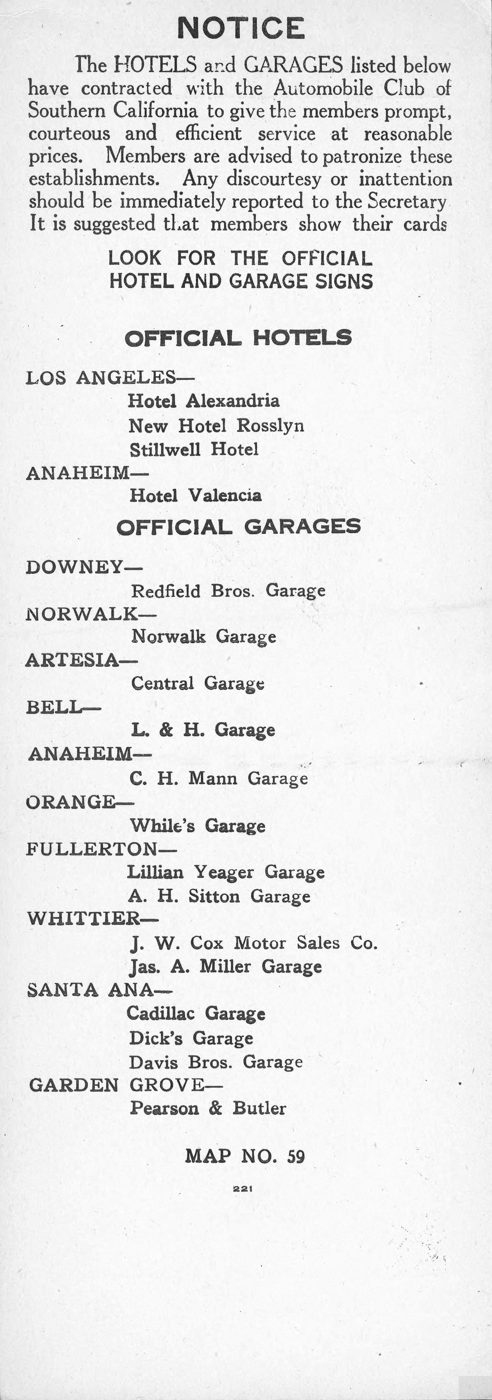
1921
Los Angeles to Santa Ana road map
An Automobile Club map from the decade the Knotts arrived — the farm towns of north Orange County strung along the roads south from Los Angeles.
Photo: Automobile Club of Southern California (unknown author) · Public domain
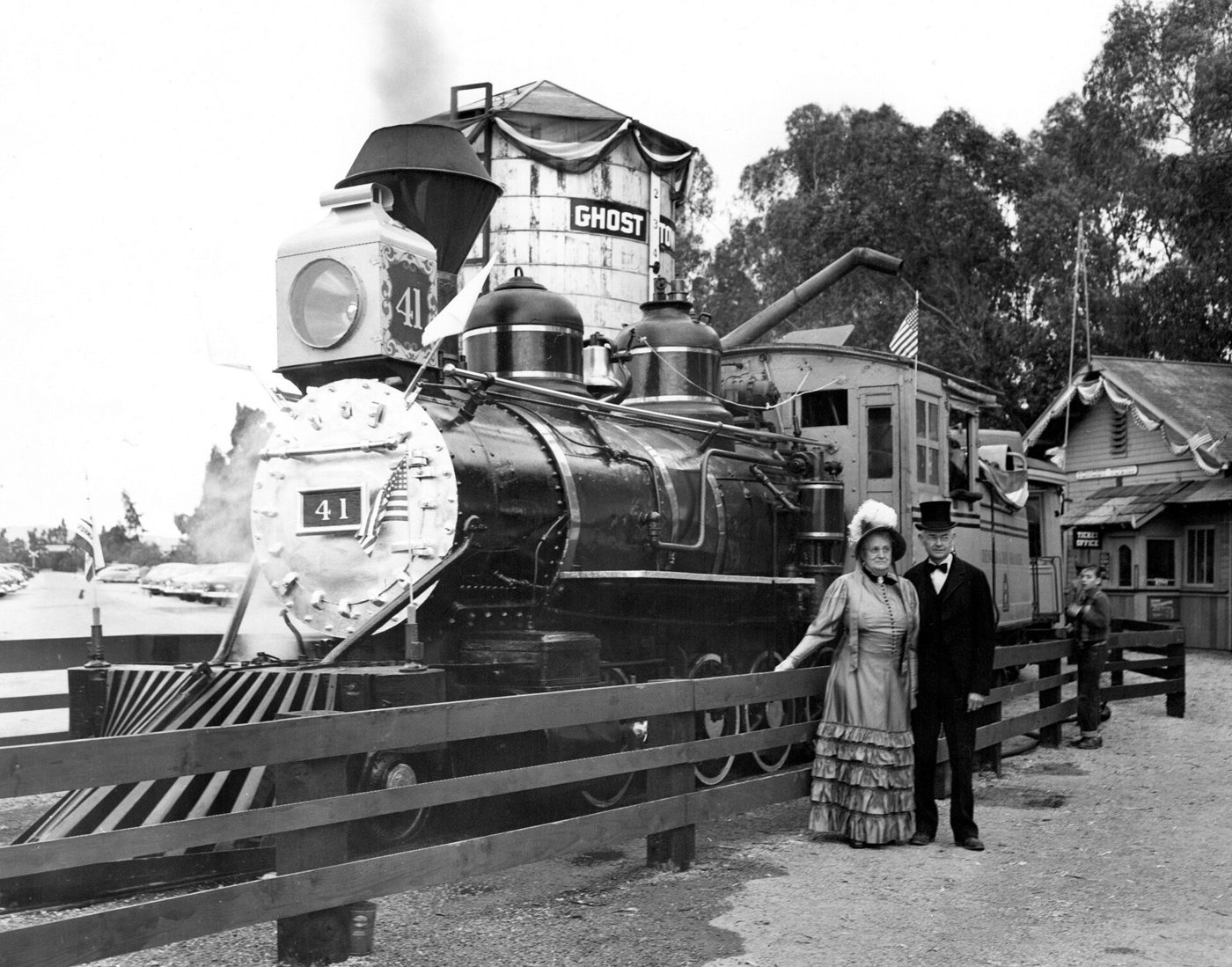
1952
Calico & Ghost Town Railroad opens
The Knott family at the grand opening of the narrow-gauge steam railroad, still running at the park today.
Photo: Orange County Archives · CC BY 2.0
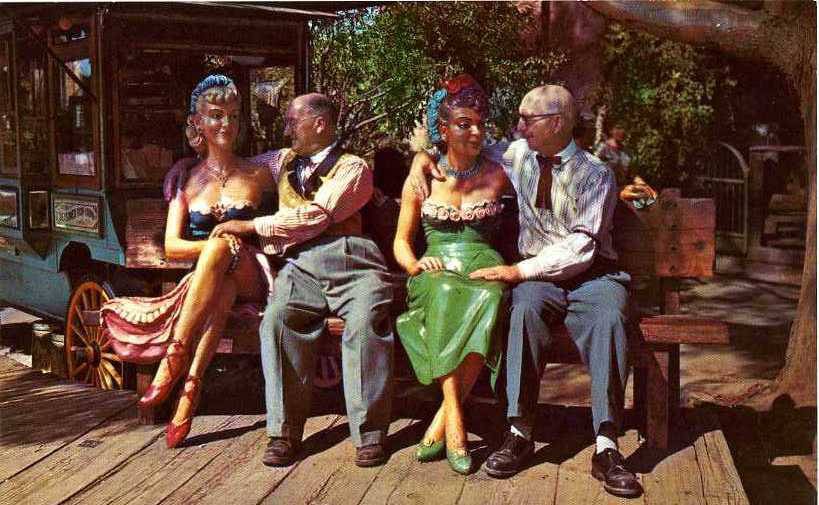
1956
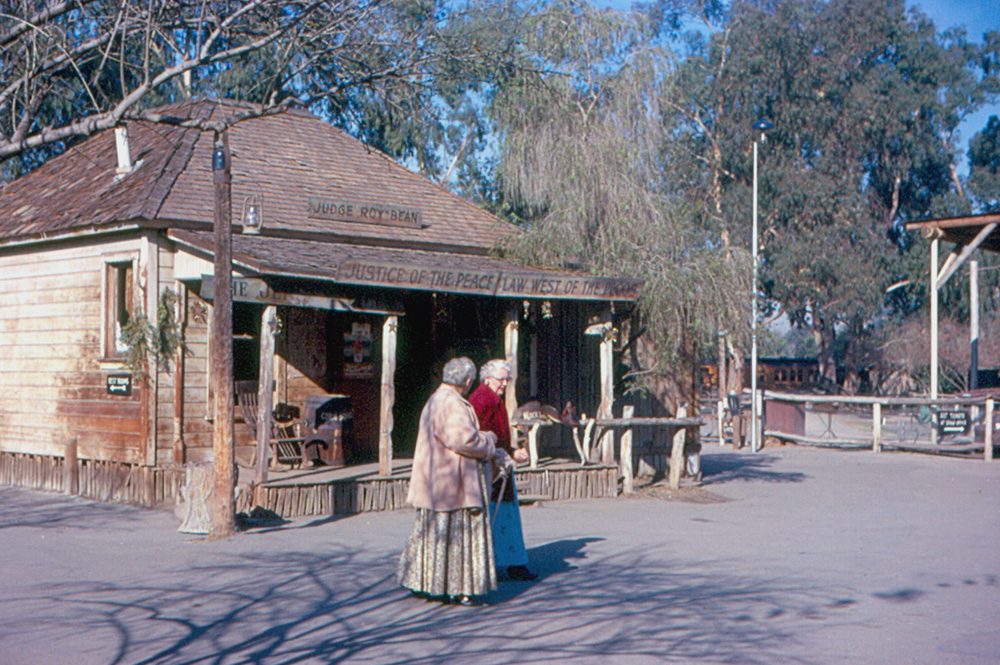
Nell and Belle, Ghost Town
A 1950s view of Ghost Town’s characters and storefronts.
Photo: Unknown author · Public domain
1961
Ghost Town on a winter visit
A visitor’s snapshot from December 1961, years before Knott’s began charging admission in 1968.
Photo: roger4336 · CC BY-SA 2.0
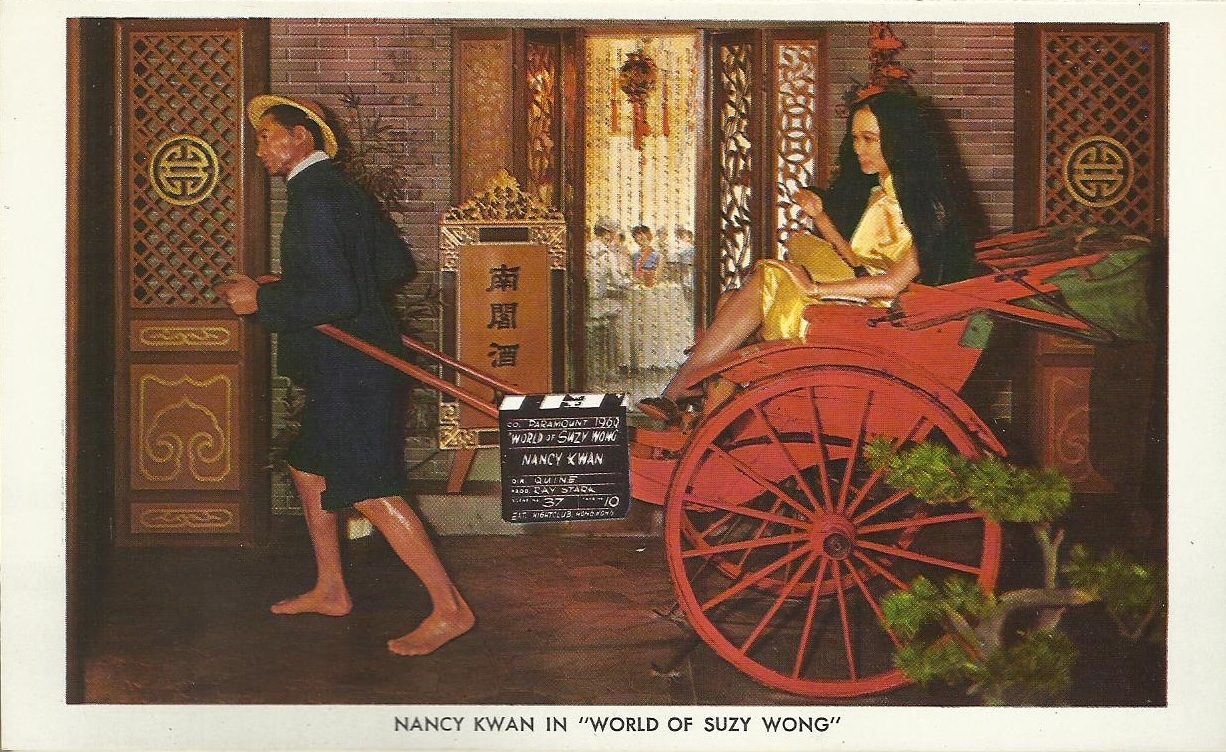
1960s
Movieland Wax Museum postcard
Beach Boulevard’s Hollywood wax museum drew visitors from 1962 until it closed in 2005.
Photo: Larry Syverson · CC BY-SA 2.0
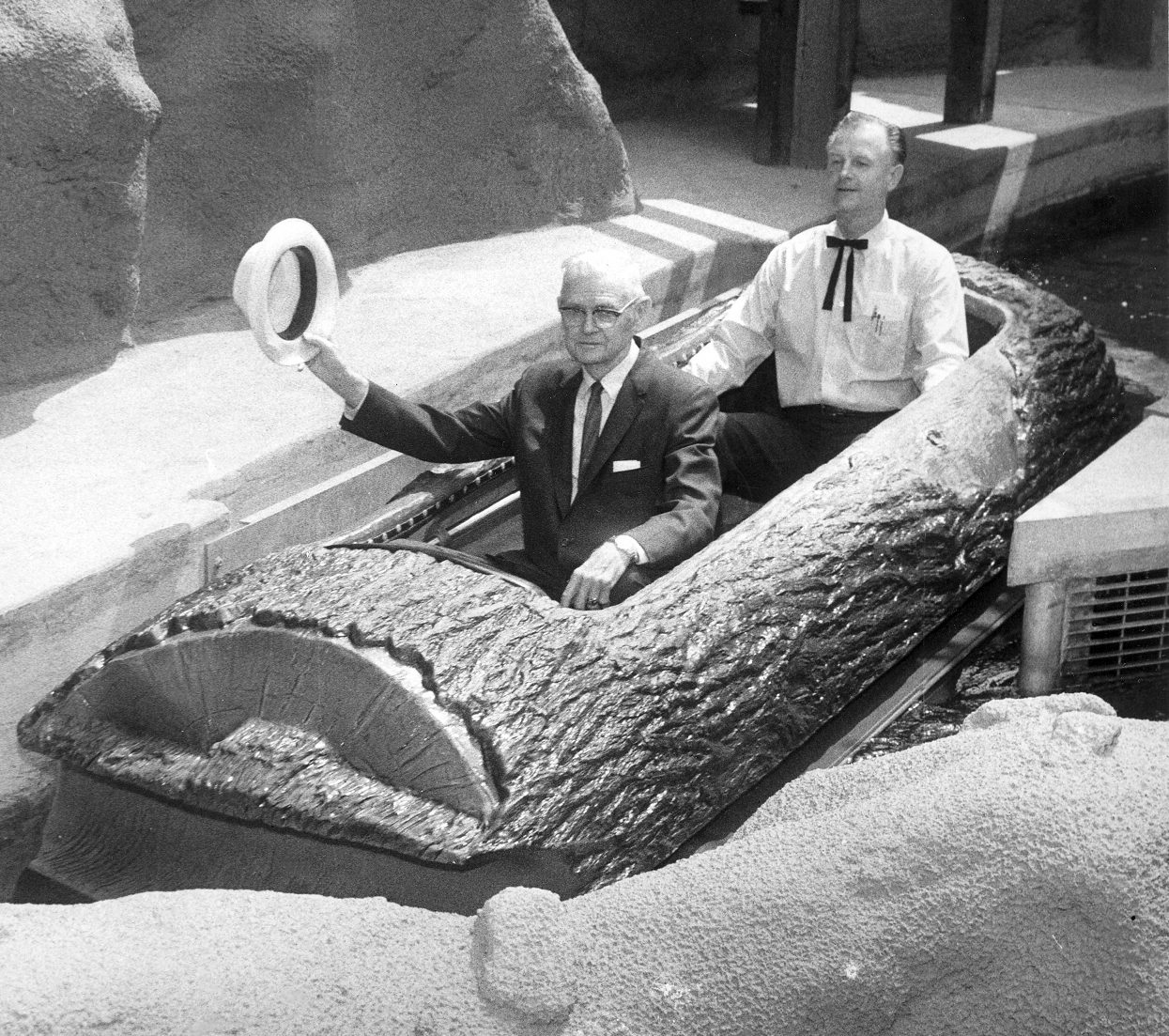
1969
Walter Knott and Bud Hurlbut, Log Ride
Walter Knott with ride builder Bud Hurlbut as the Timber Mountain Log Ride opened.
Photo: Orange County Archives · No known restrictions
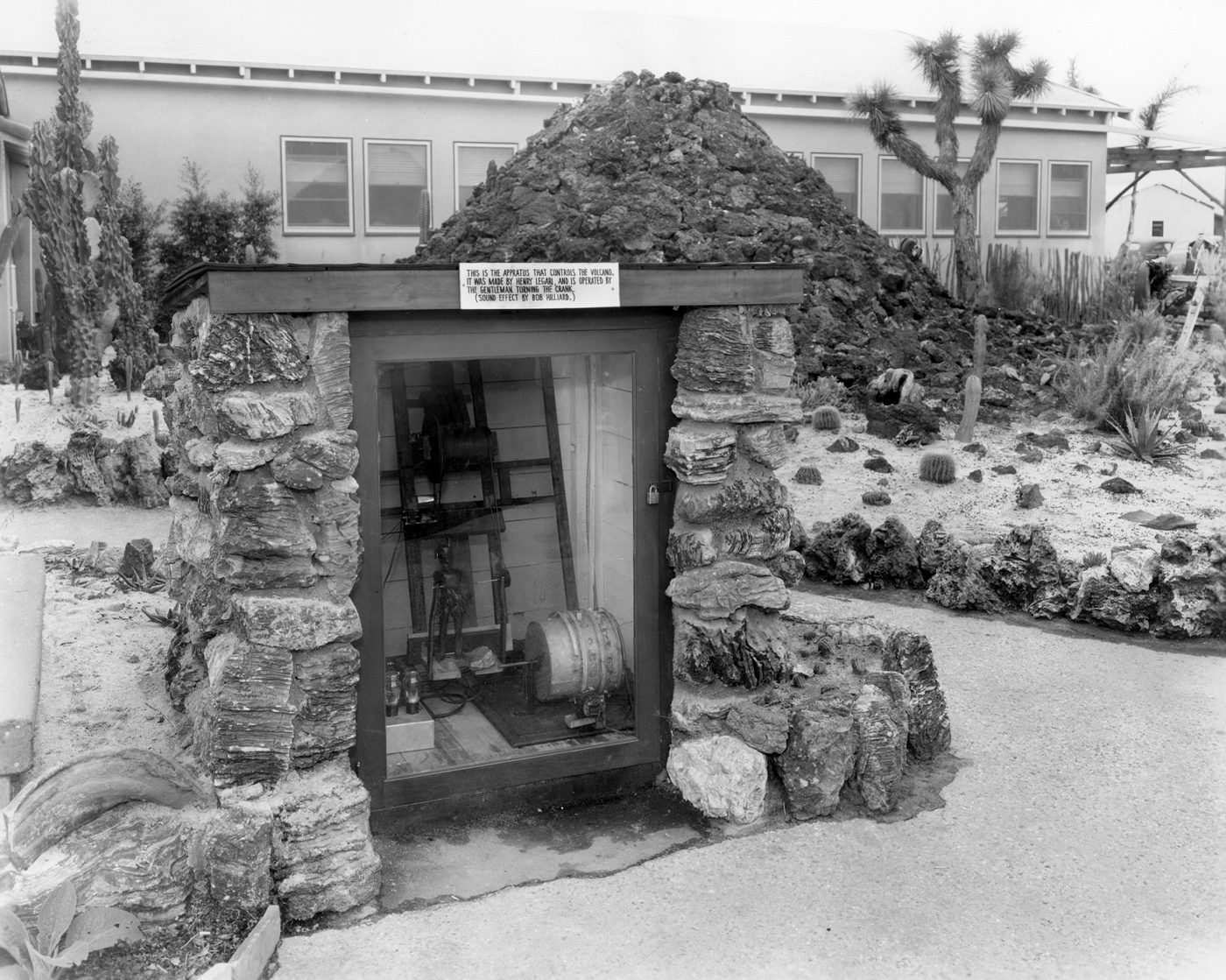
Mid-century
The Volcano at Knott’s
A landmark from the Knott’s Berry Farm collection.
Photo: Orange County Archives · CC BY 2.0
Walk it yourself
Ghost Town’s 1940s Main Street, the Calico railroad and Mrs. Knott’s Chicken Dinner Restaurant are all still on Beach Boulevard. The city’s historic Whitaker-Jaynes Estate and Bacon House preserve the farm-town era. Check the City of Buena Park for museum hours before you go.